
The Egyptian vulture
Neophron percnopterus
The smallest of the four European vultures, the most intelligent in cognitive terms, and the only one that migrates. It cracks ostrich eggs with a stone, it carries an Arabic name that shares its root with Al-Rahman (the Merciful), and it gave ancient Egypt the G1 hieroglyph, the first alphabetic sign in history. In the Vercors, we don’t see it at home. We see it pass, in spring and late summer, when a migratory stopover happens.
Egyptian vulture ID card
| Datum | Value |
|---|---|
| Scientific name | Neophron percnopterus |
| Wingspan | 1.5 to 1.7 m |
| Weight | 1.6 to 2.4 kg |
| Length | 55 to 65 cm |
| Lifespan | about 20 years wild, over 35 in captivity |
| IUCN global status | EN (Endangered) |
| France status | fully protected |
Sources: Bildstein, Vultures of the World (2022), Neophron percnopterus entry; LPO national action plan.
Wingspan and silhouette of the Egyptian vulture
Wingspan: 1.5 to 1.7 m. Weight: 1.6 to 2.4 kg. Length: 55 to 65 cm. It is a small vulture, barely larger than a common buzzard, which can make it go unnoticed when you are looking for giants.
Adult plumage is sharply marked: creamy white body, black flight feathers, bare head and throat bright yellow. In flight, the black wings against a white underside and the wedge-shaped white tail give a very recognisable silhouette. Juveniles are uniformly dark brown for their first four or five years, which can throw off observers looking for the white adult.
The only European vulture to make and use a tool
That is the data point that stands out. The Egyptian vulture is the only European vulture to make and use a tool. In Africa, it cracks ostrich eggs by hitting them with a stone held in its beak. The behaviour was first filmed in the 1960s and has been studied in detail since. Young birds learn by watching adults; the technique is transmitted culturally, with local variants (stone size, angle of strike).
In Europe, the species does not feed on ostrich eggs, but the behavioural repertoire remains. It is known for its opportunism: scraps from carnivores, placentas, droppings of large mammals (which provide carotenoids that colour the skin of its head yellow), small dead animals. Studies of the African guild show that it always arrives last on the carcass, where the other vultures have already taken their share.
The tool is not the only cognitive trait worth noting. The Egyptian vulture also carries wool and fleece into its nest, stacks bones, sometimes decorates itself with coloured fragments. It builds a habitat, not only a nest support. That behavioural plasticity makes it, alongside the crow, one of the most studied birds in animal cognition, and it casts light on why the Ancients made it a bird apart.

A migrant, the Egyptian vulture is a singular case
The other three western European vultures are sedentary (griffon, cinereous) or nomadic within a massif (bearded vulture). The Egyptian vulture migrates each autumn to sub-Saharan Africa, where it winters from the Sahel to the Gulf of Guinea. Return in spring. The crossing happens via the Strait of Gibraltar, secondarily via the Bosphorus for eastern populations.
This migration explains its limited seasonal presence in France: birds arrive in late March or April and leave in August or September. You never see it in winter. European populations have declined dramatically (poisoning, collisions with power lines, scarcer food): the species is classed Endangered globally by the IUCN.
The Egyptian vulture in France
About 90 breeding pairs, split across two cores: the Pyrenees (mostly Béarn and the Basque Country) and the southeast (Provence, Ardèche, Drôme, Luberon). The Baronnies and the Alpilles are the closest sectors to the Vercors where the species breeds regularly. The LPO coordinates the national action plan.
Frédéric Mistral admired the Egyptian vulture (which he called capoun-fer in Provençal) on the Alpilles. Jean-Marie Lamblard, in Le Vautour (2001), gives several chapters to its symbolism: it is the rachamah of Arabic (Semitic root r-h-m meaning “womb, mercy”), the G1 of hieroglyphs (the “a” sound, aleph), the Marie-Blanche of some Pyrenean valleys (the col Marie-Blanque takes its name from the bird, not from the Virgin).
In the Vercors: the Egyptian vulture is rarely on passage
Let’s be honest: seeing an Egyptian vulture in the Vercors is a matter of luck. The massif is not on a major migration corridor, the nearest breeders are in the Baronnies and come up only rarely on summer prospection. The few regular records are:
- on the Col du Rousset and the southern slope of the massif, during migration (April, August-September);
- in the Drôme valley between Die and Chamaloc, where birds from the Baronnies nest sometimes patrol.
To see it reliably, you have to leave the Vercors: the Provençal Baronnies and the Luberon reserve have monitored breeding pairs, with observation points signposted in season.
Seeing it in the Vercors is a matter of luck. You come across it more reliably in the Baronnies. If that is what motivates you, we adjust the outing: a day towards Rémuzat, a detour via the Col du Rousset in late morning, a return through the Diois vineyards. It is no longer quite the Vercors, but it is honest.
Intense symbolism and fragile ecology for the Egyptian vulture
There is a form of irony in the destiny of the Egyptian vulture: this bird carried the first alphabetic sound of humanity (the G1 hieroglyph, aleph), it gave Arabic one of the most spiritually loaded words (rachamah, mercy), it fed the symbolism of motherhood across the whole Mediterranean basin for four thousand years. Today it is classed Endangered, victim of poisoning and the rarefaction of its resources. The most cerebral animal in our skies is also the most threatened of the four European vultures.
We regularly bring up the subject during outings when we pass close to the Drôme valley: less to convince anyone to go looking for it in the Baronnies, more to place what disappears when a species goes extinct. Not just a bird, a piece of vocabulary shared by several civilisations.
To place the Egyptian vulture among the vultures
- The four species together: Vercors vultures and raptors.
- The most common in the Vercors: griffon vulture.
- The heaviest in Europe: cinereous vulture.
- The bone specialist: bearded vulture.
- Telling hunter raptor from scavenger: eagle or vulture.
- Spots and time windows to see them: watching vultures in the Vercors.
- Four thousand years of symbolism: the vulture in history.
On early outings, we scanned the sky in July as if the Egyptian vulture were about to drop from the plateau. We now set expectations differently, and when it really does pass, it is a marker.
- In the heart of the Vercors forests
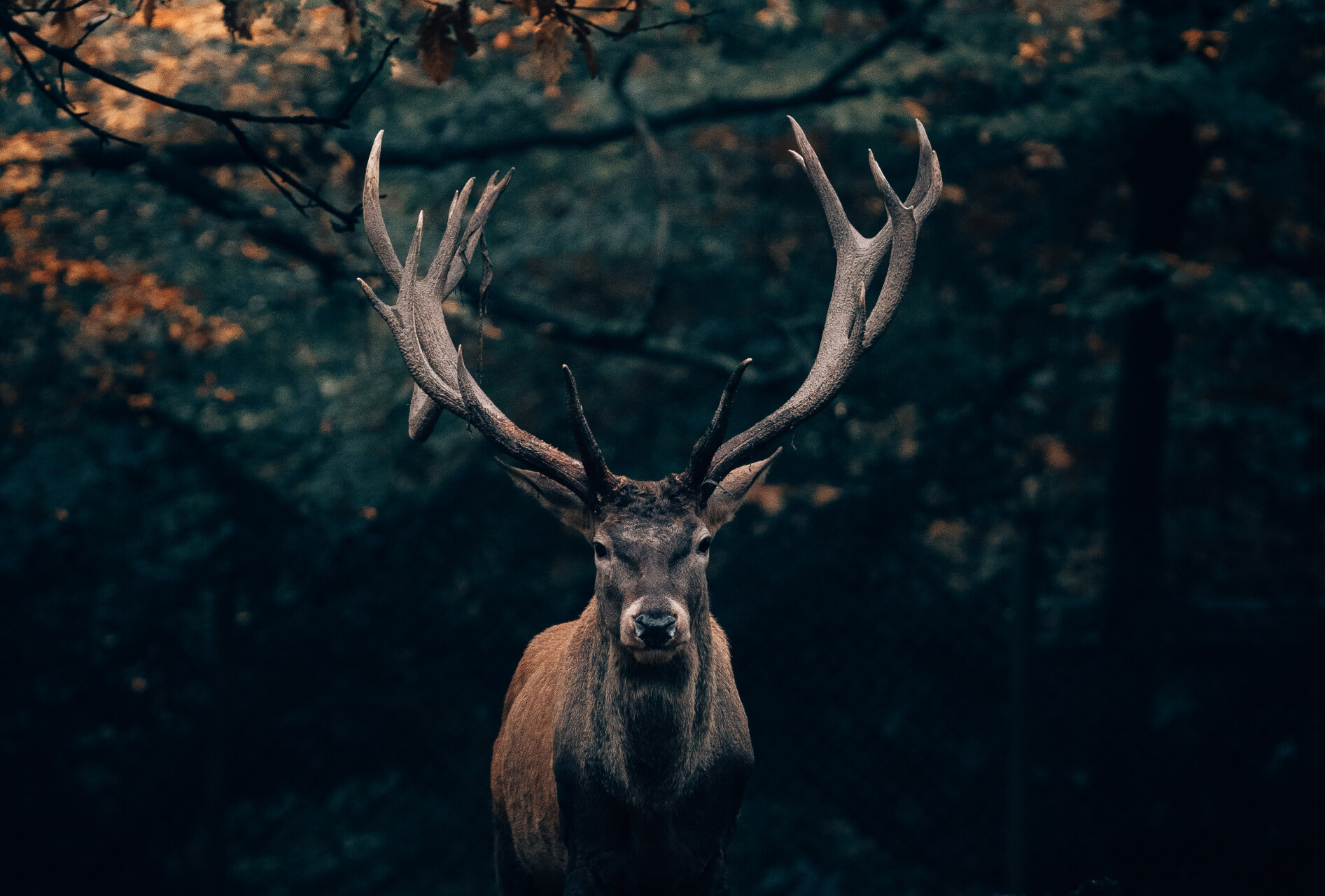
Red Deer Rut
Isère: Vercors, Villard, Autrans - On the trail of

Mountain Wildlife


