
Eagle or vulture?
How to decide, in the sky and in our heads
Two huge gliders, one thermal, and a question we all ask at the start: eagle or vulture? Both coexist in the Vercors, sometimes a hundred metres apart, and four simple traits let you decide in a few seconds. But the duality goes further than the ID: in the Western imagination, the eagle has taken the place the vulture held for two thousand years.
Deciding in flight: four field marks
1. Wing-beats. The golden eagle flaps its wings regularly, even when gliding, with visible jolts. A vulture glides almost motionless for five minutes without a single wing twitch. If the silhouette “rows”, it is an eagle. If it slides, it is a vulture.
2. The head. The eagle has a feathered head, proportionally small and hard to distinguish from the body. A griffon vulture has a head and neck covered in whitish down, clearly visible against the sky. The cinereous vulture has a bare grey head. In short: a head you can see, it is a vulture.
3. The tail. The golden eagle has a long, rounded tail that makes up a major share of its total silhouette. Vultures all have proportionally shorter tails: square for the griffon, rounded for the cinereous, diamond for the bearded vulture. The Egyptian vulture, smaller, has a wedge-shaped white tail.
4. The feet. Rarely visible, but decisive when they are. The eagle has powerful feet, feathered down to the talons, capable of carrying prey (marmot, young boar, young chamois). The vulture has weak, bare feet, unable to grasp.

On early outings, we mix them up when the bird is far and the head is not visible. The rule that worked for us: watch for thirty seconds. If it flaps, it is an eagle. Otherwise, it is a vulture.
Anatomy: two distinct families
The golden eagle belongs to the Accipitridae, the family of hawks and buzzards. It is a predator: it hunts live prey, kills with its talons, sometimes carries the kill to its nest. The Old World vultures (griffon, cinereous, Egyptian) are classed in the same family, subfamily Aegyptinae. They have lost the predator traits and gained those of the scavenger: bare or downy head to avoid soiling in carcasses, beak adapted to tear flesh already opened, weak feet, energy-efficient flight to cover long distances. The bearded vulture shares this subfamily but keeps a feathered head, an intermediate trait.
New World vultures (condors) belong to a separate family, the Cathartidae, from an independent lineage. Their resemblance to Old World vultures is a case of convergent evolution: same ecological constraints, same morphological solutions, no recent kinship. Keith Bildstein gives a chapter to that point in Vultures of the World (2022). French field data is tracked by rapaces.lpo.fr.
Diet: who kills, who cleans
The eagle kills. It hunts from a perch or in flight, catches marmots, hares, young ungulates, sometimes birds on the wing. Its main prey in the Alps are marmots and young chamois. An eagle eats about 200 grams of meat a day when not breeding, two to three times more when feeding a chick.
The vulture does not attack. Veterinary studies run in France in the 2000s, in particular on suspected attacks on sheep in the southern Massif Central, concluded that the animals were dying or already dead in nearly all the cases. A vulture on a live lamb is the documented exception, never the rule. The species that attacks, in the Vercors, is the golden eagle, more rarely the raven or the lynx.
In the Vercors, you come across both, sometimes in the same thermal. The first to attack a prey is never the vulture. The first to arrive on an abandoned carcass, rarely the eagle.
Symbolic duality: the long history
What can surprise: through almost all of antiquity, the eagle and the vulture were complementary, not opposed. The eagle was Zeus’s bird, messenger of the heights, symbol of royal and warrior power. The vulture was the maternal bird, the purifier, symbol of Upper Egypt (goddess Nekhbet), of the fecundating breath, of mercy. Two poles of the same world, not two adversaries.
Jean-Marie Lamblard tells of that shift in Le Vautour (2001). The Egyptians used the G14 hieroglyph (griffon vulture) as the ideogram of the word “mother”. Plutarch, at the turn of our era, takes the vulture’s defence explicitly against the eagle: “The eagle lives only by murder, it appears only at rare intervals. The vulture, on the other hand, is the servant of life.”
The reversal happens between imperial Rome and modern Europe. Marius chose the eagle as the sole emblem of the Roman legions in 104 BCE: the vulture left the symbolism of state. The Church Fathers kept the vulture for a time (Tertullian, Basil: fertilisation by the wind = natural proof of the Marian virginity), but Jerome’s Vulgate (4th-5th century) replaced the vulture with the pelican in Christ symbolism. Buffon, in the 18th century, sealed the case: the eagle became “the king of birds”, the vulture “a vile animal”. Michelet, in the 19th, tried to rehabilitate it: “The eagle lives only by murder. The vulture, on the contrary, is the servant of life.” The public did not follow.
The ecological return of the vulture in France, from 1981 on, is also a symbolic return. When we take a group to watch at the Col du Rousset, we often tell them this story: the animal they are watching glide, their Greek ancestors called it living tomb with respect, their grandparents killed it as vermin, we protect it once more. The same bird, three gazes.
To dig into this history: the vulture, from hieroglyphs to the Causses. To see both in the same sky: Vercors vulture watching notes.
- Watching
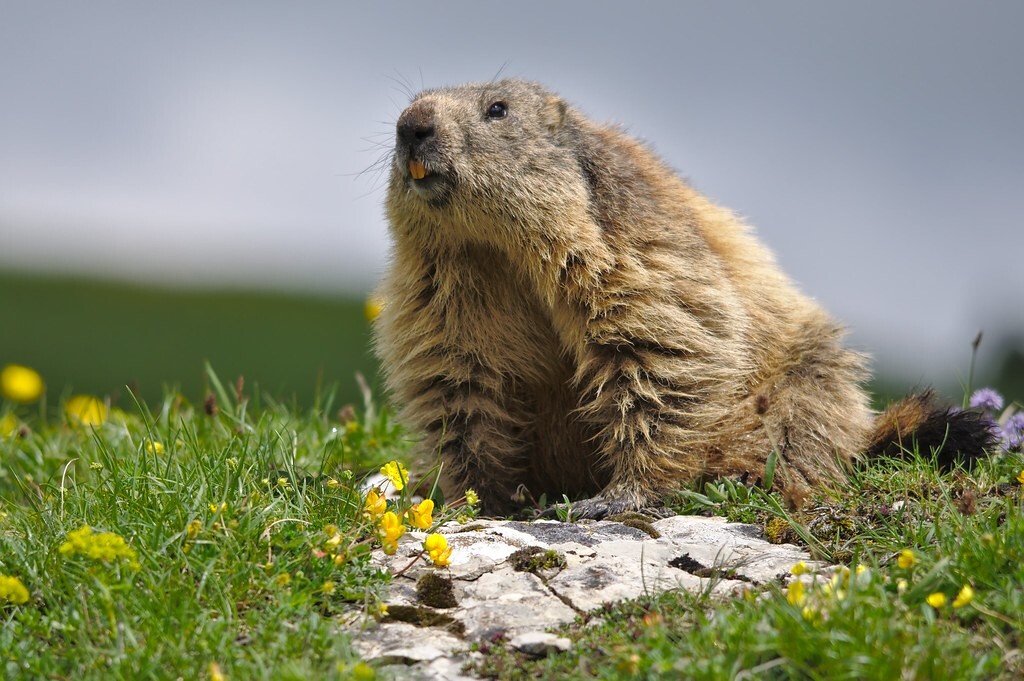
The marmot
- In the heart of the Vercors forests
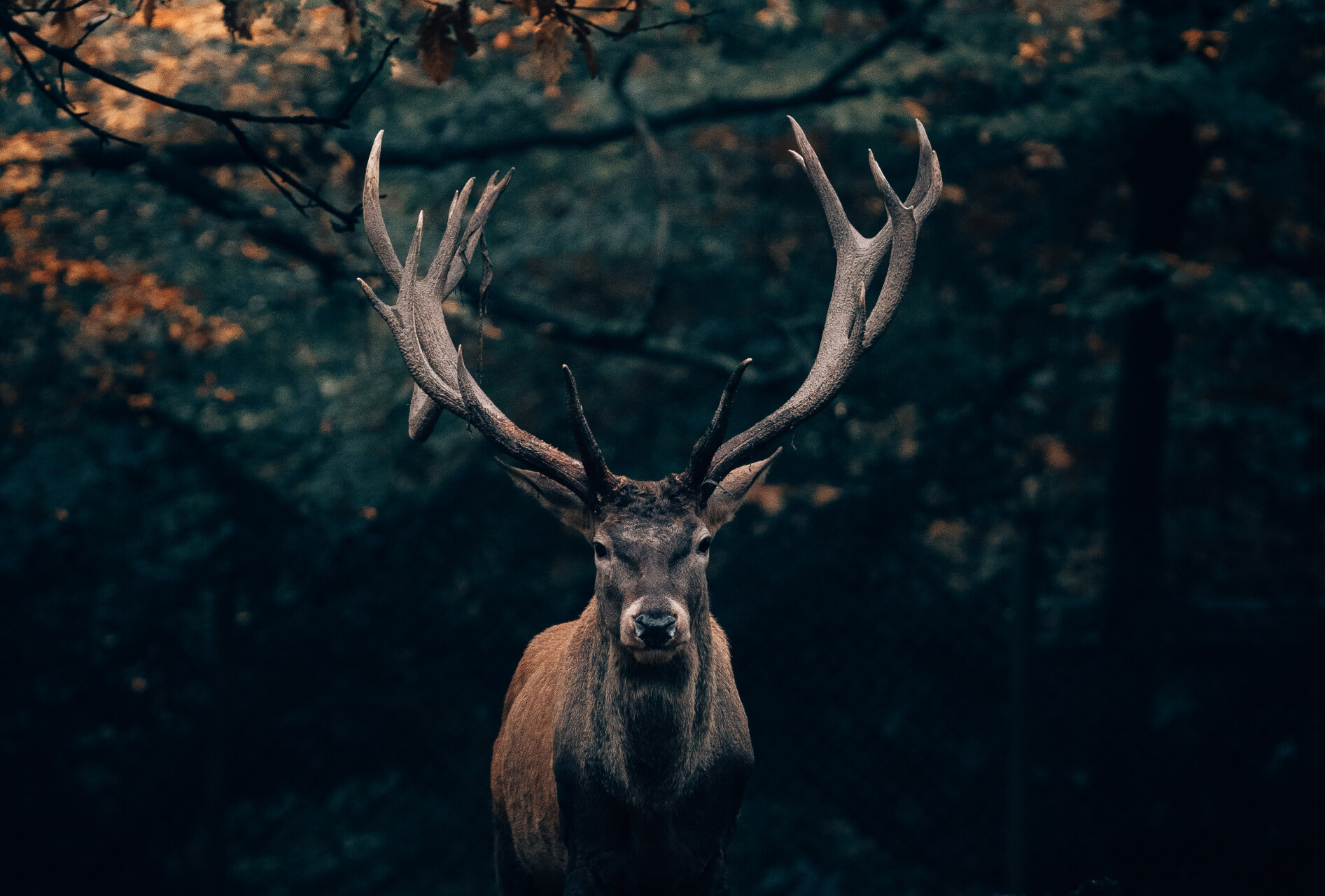
Red Deer Rut
Isère: Vercors, Villard, Autrans


