
The bearded vulture
in the Vercors and the Alps
The only bird in the world that lives almost exclusively on bones. It does not hunt, does not attack lambs despite the nickname lamb-killer inherited from a 19th-century Alpine misunderstanding. It waits for the other vultures to finish their meal, carries off a tibia or a femur, and drops it onto a rock from thirty to eighty metres up to break it. In the Vercors it is still rare, but you do see it. And when you do, the silhouette looks like nothing else.
Bearded vulture ID card
| Datum | Value |
|---|---|
| Scientific name | Gypaetus barbatus |
| Wingspan | 2.3 to 2.8 m |
| Weight | 4.5 to 7 kg |
| Length | about 1.10 m |
| Lifespan | around 21 years wild, over 40 in captivity |
| IUCN global status | NT (Near Threatened) |
| France status | fully protected |
Size and wingspan of the bearded vulture
Wingspan: 2.3 to 2.8 metres. Weight: 4.5 to 7 kg, sometimes a bit more in adult females. Total length of an adult: about 1.10 m from beak to tip of tail. Figures from Keith Bildstein, Vultures of the World (2022), Gypaetus barbatus entry.
That is a little less than the griffon in wingspan, but the bearded vulture is much thinner, longer-tailed, with a slimmer profile. At equivalent wingspan, it weighs about half. That lightness lets it soar on weak thermals, early morning or late afternoon, where the griffon is still waiting on its ledge.
The species inhabits the high mountains of Europe, Africa and Asia. In France, there are around thirty breeding pairs in the Alps and around ten in the Pyrenees, according to the annual reviews published by rapaces.lpo.fr.
Recognising a bearded vulture in flight
The diamond silhouette. That is the mark that closes the discussion. Long, pointed wings, and above all a long, wedge-shaped tail that forms the bottom of the diamond. No other large European glider has that tail. A griffon has a short square tail; a cinereous vulture, short and rounded. The bearded vulture is a slow diamond, often alone, crossing a combe without a wing-beat.
The underside is ochre, sometimes rust-coloured in adults that bathe in ferruginous springs. This ochre mud bath tints the belly and head: it is called ferruginous plumage. The bird is the only European vulture to colour itself deliberately. Juveniles are noticeably darker, almost black on body and wings, which complicates the ID during the first five to six years.
It took us three seasons to see one for the first time in the Vercors. When you go out as a group, four pairs of eyes spot faster, and you need that: the bearded vulture often passes at a distance where you have to know where to look before raising the binoculars.

A diet of bone for the bearded vulture
About 70 to 85% of a bearded vulture’s diet is made of bones, mostly from wild and domestic ungulates. For bones too big to swallow whole, it climbs and drops them onto an oriented rock slab that it uses regularly: this is called a bone breaker or ossuary. Some sites in Spain have been occupied for several centuries.
The bearded vulture’s digestive system is unusually acidic (pH around 1), which lets it dissolve swallowed pieces in a few hours. Marrow, highly energetic, is the real target. Tortoise remains have even been documented: the Ancients told the story that Aeschylus, the Greek playwright, supposedly died from a tortoise dropped on his bald head by a bearded vulture that took him for a rock. The anecdote is probably a fable, but it is a reminder that a bone is not food you extract from a carcass: it is food you make by breaking.
A unique ecological niche for the bearded vulture
No other large living vertebrate occupies that place. On a mountain ungulate carcass, the sequence is always the same: the golden eagle or the raven finds the first share, the griffons arrive in a group and take the soft parts, the cinereous opens what resists, then, often several days after death, the bearded vulture comes back for what no one else can digest. The remaining bones, dried tendons, hardened cartilage. What is called extreme trophic specialisation: when resources are scarce, the animal has to itself what no one else wants. The strategy works in massifs where ungulates are plentiful and nowhere else.
A breeding pair defends a home range of 200 to 400 km². In a massif like the Vercors, that means there is room for maybe one or two pairs, no more, provided the bone resource keeps up.
Is the bearded vulture dangerous?
No. The bearded vulture has the smallest beak relative to its size of any European raptor. It has no predatory anatomy. The lamb-killer legend comes from poorly interpreted 19th-century observations, and was used to justify its destruction by gun and poison until its extermination from the Alps in the 1910s. It has not attacked a lamb in modern veterinary records. It has never attacked a child, despite the stories that still went around Alpine valleys in the 1970s.
The fear that persisted nearly wiped it out. The European reintroduction, launched in 1986 by the Foundation for the Conservation of Vultures, released over 200 captive-bred birds in the Alps. The first wild breeders reappeared in Haute-Savoie in 1997, in the Mercantour in 2006.
Where to watch the bearded vulture in the Vercors
The Vercors has no known breeding pair to date. The birds seen are wanderers, juveniles prospecting, or adults from the Dévoluy, Mercantour or Bauges cores. Areas where the bearded vulture has been seen in recent years:
- Vercors Highlands, Grand Veymont and Pas de la Ville, especially during juvenile dispersal (late summer, early autumn);
- eastern ridges facing the Trièves, with passages from the Dévoluy;
- Col du Rousset and Font d’Urle, on the southern edge of the massif.
The Casseur d’os observation networks coordinated by the LPO collect every sighting: reporting a bearded vulture in the Vercors feeds the national monitoring. To know what to note (time, direction, plumage, presence of a wing marker), the LPO technical sheet is the right entry.
Breeding and calendar for the bearded vulture
The bearded vulture nests on a cliff, in a cave or under an overhang. A single chick per pair per year, very rarely two. Egg-laying takes place between December and February, hatching in March, fledging around June. The youngster stays dependent for several more months, and sexual maturity only comes at five or six years. Demography is slow, which is why every individual counts and why disturbance during egg-laying remains a serious threat. In winter, keeping your distance from a known cliff is basic.
Pairs are faithful, sometimes triadic: a few breeding trios with two males and one female have been documented in the Pyrenees, a rare trait among raptors.
The call of the bearded vulture
Nearly silent. Contrary to what the size suggests, the bearded vulture utters rare sharp whistles near the nest, and a discreet croak during courtship. You almost never hear it from the ground. The bird is silent, the sky above it too.
Current threats to the bearded vulture
The bearded vulture is still classed Near Threatened globally. The threats identified by European monitoring networks are well known: unintended poisoning by baits aimed at carnivores, lead from hunting ammunition ingested via viscera left in the mountains after a shot, collisions with power lines and badly placed wind turbine blades, disturbance during breeding. Lead is particularly serious: invisible, cumulative, it affects the nervous system and reproduction for years before it kills.
Measures exist and they work. Lead-free ammunition is gaining ground among hunters, supplementary feeding sites managed by reserves provide clean carcasses, motorised flights are regulated around known nests. We contribute by reporting our sightings to the Casseur d’os network and respecting the quiet zones posted around breeding sites.
Going further on vultures
- Comparison of the four species: Vercors vultures and raptors.
- The heaviest of the four: cinereous vulture.
- The most frequent in the Vercors: griffon vulture.
- The smallest, only on passage: Egyptian vulture.
- Golden eagle vs bearded vulture: eagle or vulture.
- Spots and time windows: watching vultures in the Vercors.
- Four thousand years of symbolism: the vulture in history.
On early outings, we have all taken a griffon for a bearded vulture when the tail disappeared against the light. The rule we take with us: before crying out for a bearded vulture, look at the tail a second time. If the diamond is not there, it is not the one.
- Watching the
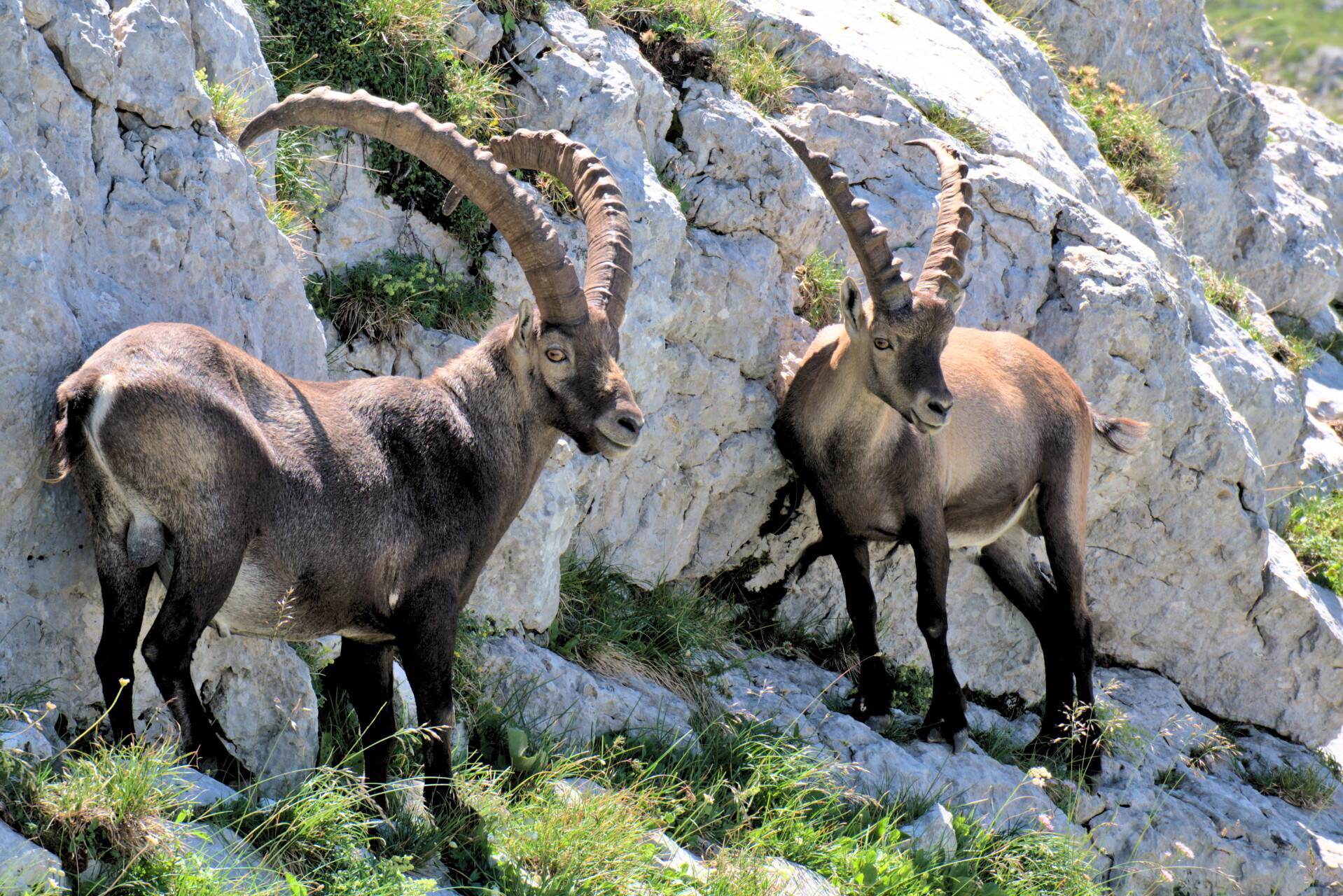
Alpine Ibex
- Watching the
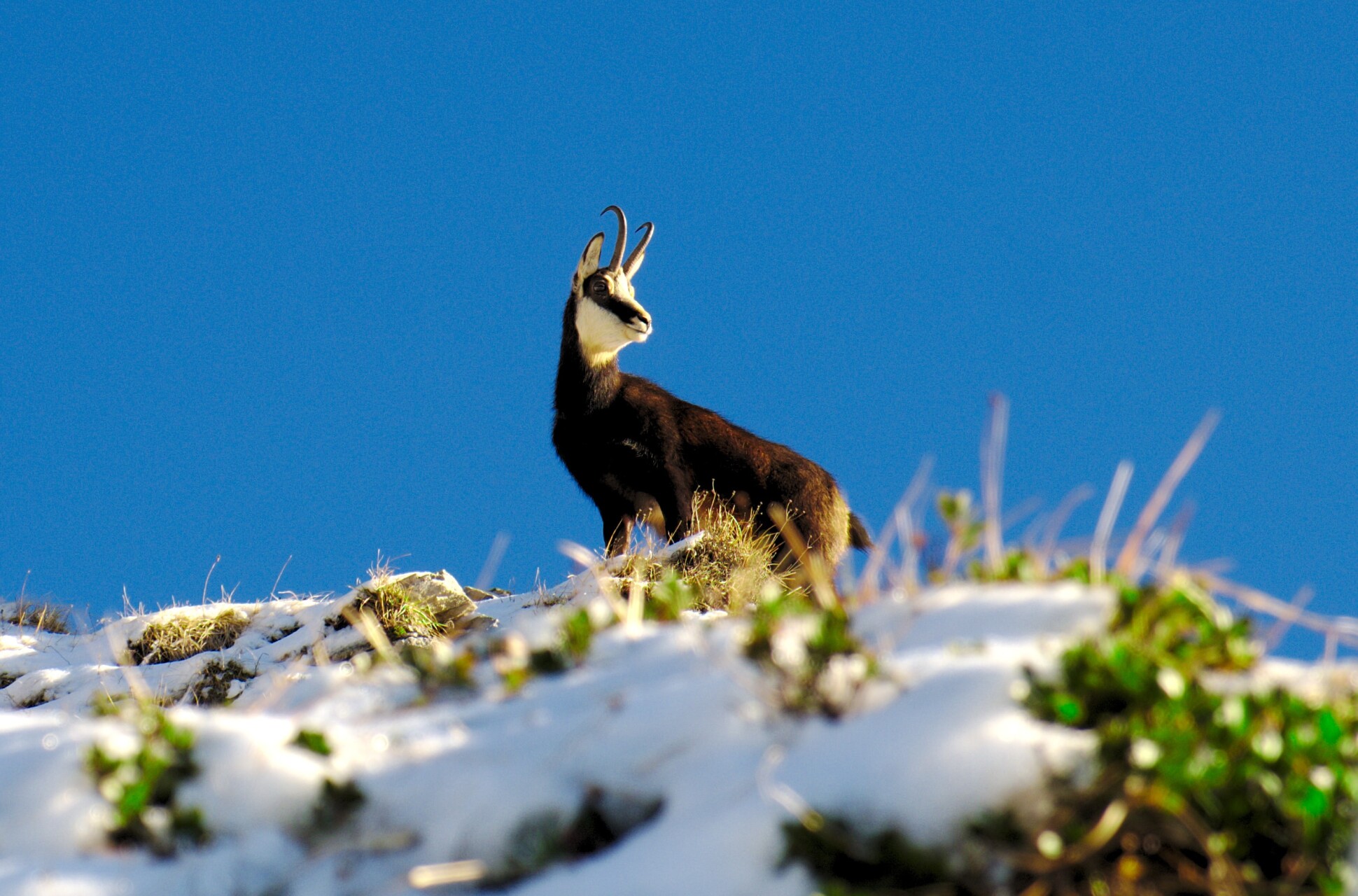
Alpine Chamois - Vercors


